




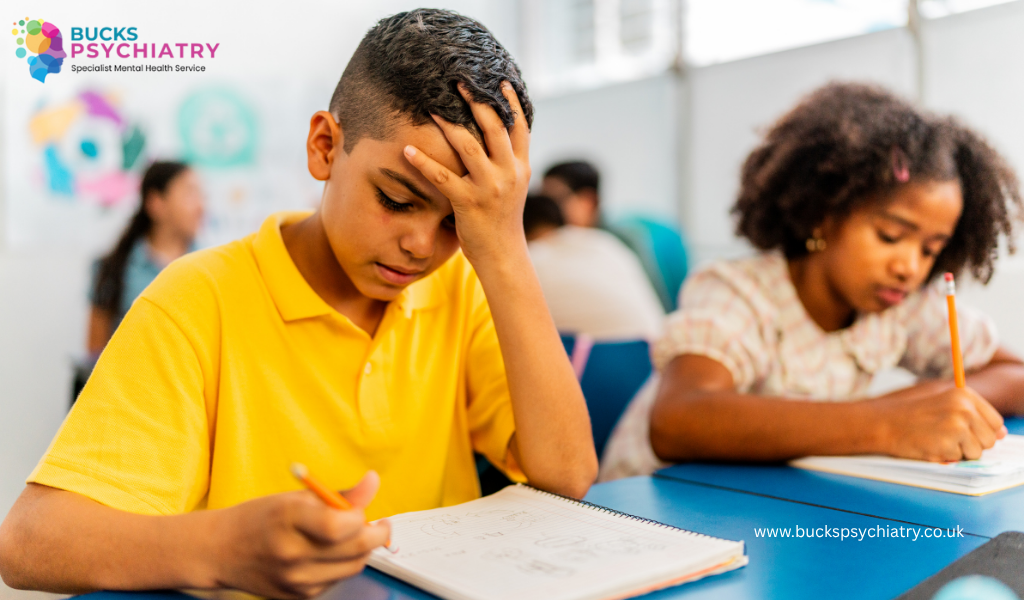
This is something many children go through. It is called school anxiety. It does not mean your child is being lazy. It does not mean they are trying to make problems. It means something about school feels difficult or overwhelming for them, and they do not have the words to explain it. So their feelings come out through crying, sickness, or refusing to go.
You are not a bad parent.
Your child is not a bad child.
Both of you are trying to manage something that feels big.
Read More: Understanding The Impact Of Mental Health On Children's Development
What School Anxiety Can Look Like?
School anxiety can show up in many small but strong ways. Some children may complain of stomach pain or headaches only in the mornings before school. Some may cry or hold onto a parent tightly. Others may get very quiet and withdrawn. Some children struggle to sleep at night because they worry about the next day.
These are sign of school anxiety in children, and they are signals that your child is having a hard time emotionally, even if they don’t know how to talk about it.
Your child is not doing this for attention.
They are trying to cope with feelings that feel too big for them.
Why Does School Feel Hard?
There are many reasons school may feel stressful. School work may feel confusing or overwhelming. Your child may be scared of making mistakes or being called on in class. They may feel shy or worried around other kids. They may feel like they don’t fit in. Sometimes, a child may be getting teased or quietly bullied, and they don’t know how to say it.
For some children, simply being away from a parent feels scary. A new school, new teacher, or new environment can also make a child feel unsure and nervous. And sometimes, children have Anxiety Disorders, which makes everyday situations feel heavier and harder.
None of this is your child’s fault.
Your child is not weak.
They are overwhelmed.
How to Support Your Child at Home?
When your child is upset in the morning, try to slow things down. A rushed morning can make anxiety much stronger. If your child is crying or panicking, sit close to them. You don’t need to talk a lot. Sometimes children just need to feel your presence.
You can say gentle words like:
“I know this feels really hard.”
“I am right here. You are not alone.”
“We will take this one small step at a time.”
You do not need to force them to “be brave.”
You do not need to fix everything in one day.
Just being calm helps more than anything.
To make mornings easier, you can pack the school bag the night before, choose clothes earlier, and wake up a little sooner so there is no rush. You can also do slow breathing together — breathing in softly, and breathing out slowly. This helps the body calm down naturally.
Working Together with the School
You do not have to carry this alone. You can talk to your child’s teacher and explain what mornings are like. Teachers often want to help and can make small changes that help your child feel safer. Maybe your child can sit near someone they feel comfortable with. Maybe the teacher can greet your child gently at the door so they feel welcomed. Maybe your child can take short breaks when they feel overwhelmed.
School should feel safe, not scary.
Small adjustments can make a big difference.
When to Seek Extra Support?
If the anxiety continues for weeks and makes daily life hard, it may help to speak with a Child Counselor or Therapist. This is nothing to feel ashamed of. Just like we get help when our body is hurt, we can get help when feelings are heavy.
Your child is not broken.
They simply need support to feel steady again.
Small Steps Are Real Progress
Your child might not suddenly be okay with school in one day. That is alright. Healing takes time. Celebrate small steps — getting dressed without tears, going to school for part of the day, explaining how they feel instead of shutting down. These little steps show your child is trying.
Trying is courage.
Even if it looks small.
Conclusion
School anxiety is not easy. It can be painful to watch your child struggle, and it can also be hard for you as a parent to stay strong every morning. But please remember — your child is not doing this on purpose. They are trying to handle something that feels too big for them.
With patience, gentle routines, understanding from school, and emotional support when needed, your child can slowly learn to feel safe again. You do not need to be perfect. You just need to be present. Your love and calmness are a powerful guide for your child.
You and your child are on the same team, walking through this slowly, together.
And even small steps forward are still steps forward.
FAQ’s (Frequently Asked Questions) about School Anxiety
1. Why does my child cry before school?
Your child may be feeling scared, worried, or overwhelmed about something at school. Crying is their way of letting out those feelings because they don’t know how to explain them in words yet.
2. Is my child doing this on purpose?
No. School anxiety is not attention-seeking. Your child is trying to show that something feels too hard or too scary for them right now.
3. Should I force my child to go to school?
It is important for children to attend school, but forcing or shouting can make anxiety stronger. Instead, try small steps, calm mornings, and talk with the school for support.
4. What should I say when my child is scared?
Stay close and speak softly. You can say things like:
“I know this feels hard, but I am here with you.”
Your calmness helps them feel safe.
5. Can school anxiety get better?
Yes. With patience, routine, gentle support, and sometimes help from teachers or a counselor, children can learn to feel safe and confident again. Healing takes time, but it is possible.