




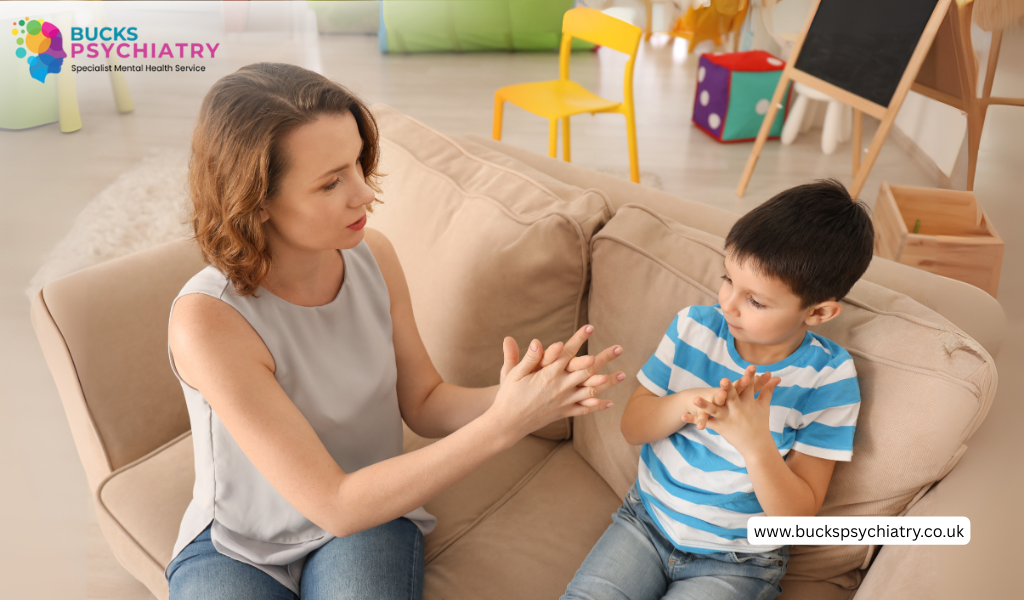
Autism Spectrum Disorder (ASD) affects how a person communicates, understands others, and experiences the world around them. People with autism often learn, think, and behave in ways that may feel different from what others expect. Autism is a lifelong condition, but that does not mean a person cannot enjoy a happy, fulfilling life.
With the right support, many people on the spectrum can learn valuable skills, grow in confidence, and become more independent. At Bucks Psychiatry, we see every person as an individual. That’s why the treatment of autism spectrum disorder should always be tailored to the person, not the other way round. There’s no “one-size-fits-all” approach. The best plan is the one that works for their needs, strengths, and goals.
This guide covers some of the most effective therapies for autism spectrum disorders, the importance of spotting autism early, and how families and professionals can work together to offer the best support possible.
More from Our Blog: How Do Psychiatrists Diagnose Mental Health Conditions?
Why Early Diagnosis Matters?
An early diagnosis of autism spectrum disorders can make a real difference. The sooner autism is recognised, the sooner the right help can begin. This is especially important for young children, as their brains are still developing quickly and are more able to adapt and learn new skills.
The first people to notice symptoms are frequently parents and carers. These may consist of:
● Speaking in a way that is inappropriate for their age
● Not making eye contact
● Not participating in group activities or play
● Frequently repeating the same gestures or words
● Strong reactions to particular textures, lights, or sounds
It's worthwhile to schedule a professional evaluation if you notice these symptoms. At Bucks Psychiatry, we gently walk families through the process so that support can start right away.
Behavioural Therapy for Autism
One of the most effective approaches is behavioural therapy for autism spectrum disorders. This type of therapy teaches skills in small, simple steps and rewards progress along the way.
A common method is Applied Behaviour Analysis (ABA). In ABA, skills are broken down into smaller parts, and each step is taught clearly, with praise or rewards given for success. This can help improve social skills, communication, and everyday routines.
Behavioural therapy isn’t just for children — it can help people of all ages. At Bucks Psychiatry, our goal is not just to change behaviour but to help each person feel understood, confident, and capable.
Speech and Language Therapy
Many people with autism find communication challenging. Some may speak very little or not at all. Others might talk a lot but struggle with the flow of Many people with autism find communication challenging. Some may speak very little or not at all. Others might talk a lot but struggle with the flow of conversation.
Therapies for autism spectrum disorders often include speech and language support. A speech therapist can help with:
● Speaking more clearly
● Building vocabulary
● Understanding facial expressions, tone of voice, and body language
● Using tools like picture cards or apps to support communication
Better communication often means less frustration and more connection with friends, family, and the wider community.
Occupational Therapy
Occupational therapy focuses on everyday life skills such as dressing, eating, writing, or using a computer.
Many people with autism also have sensory differences. They might be very sensitive to noise, bright lights, certain textures, or strong smells. An occupational therapist can suggest practical ways to cope — for example, noise-cancelling headphones or softer fabrics for clothing.
At Bucks Psychiatry, our occupational therapy is always practical and tailored to fit the person’s home, school, or work environment.
Social Skills Training
Making friends and joining in with conversations can be difficult for some people on the spectrum. Social skills training offers a safe space to learn and practise these abilities.
This can include:
● Role-playing everyday situations
● Taking part in group activities
● Practising real conversations
● Learning to recognise social cues, such as body language or tone of voice
These skills can help build confidence at school, work, and in social situations.
Support for Families
Autism affects the whole family, not just the person diagnosed. Parents, carers, and siblings may also need advice and emotional support.
At Bucks Psychiatry, we involve families in therapy whenever possible. We share simple strategies for supporting someone with autism at home, in public, and during challenging moments.
We also offer counselling or adapted Cognitive Behavioural Therapy (CBT) for family members who may feel stressed, anxious, or low in mood. This can make a big difference in coping with the daily challenges that can come with autism.
Medical Support
While there’s no medicine that treats autism itself, some medications can help with related difficulties, such as anxiety, sleep problems, or trouble concentrating.
Any medication should be prescribed and monitored carefully by a qualified doctor. It works best alongside therapies and should never replace them.
A Personal Approach to Treatment
The best treatment of autism spectrum disorder is always personalised. At Bucks Psychiatry, we often combine different supports — such as behavioural therapy for autism spectrum disorders, speech and language therapy, occupational therapy, and social skills training — to provide well-rounded care.
We focus on strengths as much as challenges. This helps build self-esteem and supports long-term independence.
Building a Supportive Community
Therapy works best when the wider community understands autism. Schools, workplaces, and local groups can all make life more inclusive.
Raising awareness helps reduce misunderstandings and encourages acceptance. At Bucks Psychiatry, we work to spread understanding so people with autism can take part fully in everyday life without unnecessary barriers.
Final Thoughts
Autism is a lifelong condition, but with early help, the right therapies, and a supportive network, people with autism can lead full, happy, and independent lives.
At Bucks Psychiatry, we are committed to providing kind, personalised care — from therapies for autism spectrum disorders to family support and behavioural therapy for autism spectrum disorders — so every person can have the best chance to reach their potential.
If you think you or someone you care for may have autism, we’re here to help. Together, we can find the right way forward.
FAQ's